If you run a small company in the USA, you’ve felt it. Competition is tougher than ever. Your customers search on their phones. They often choose the first business that looks trustworthy.
That’s where on-page SEO matters. It helps your website show up for the right searches. It also helps visitors take action once they land. This is why small companies need on page SEO today.
In this guide, you’ll get seven clear reasons it works. You’ll also get a simple roadmap to improve your pages fast.
No buzzwords. Just practical steps you can use for your small business.
What On-Page SEO Means for Small Business Growth in the USA
On-page SEO vs. local SEO optimization vs. off-page signals
On-page SEO is what you control on your website. It includes page titles, headings, content, internal links, and keyword targeting. It also covers page layout, images, and basic content optimization.
Local SEO optimization focuses on location signals that help you show up nearby. Think in city terms, service areas, and consistency across your pages.
Off-page signals happen outside your site. They include backlinks, reviews, and brand mentions. All three work together, but on-page SEO is your fastest lever. It supports key SEO ranking factors like relevance, quality, and user experience.
Why “user-friendly website design” affects rankings and conversions
Google watches how people use your site. If visitors get confused, they leave fast. That hurts organic search visibility over time. A user-friendly website design keeps pages easy to scan and trust. Clear headings, short sections, and simple navigation help. So does a strong offer near the top. When pages load quickly and read well, online visibility improves. More importantly, more visitors turn into calls, forms, and booked appointments.
Why Small Companies Need On Page SEO (The Non-Negotiable Reasons)
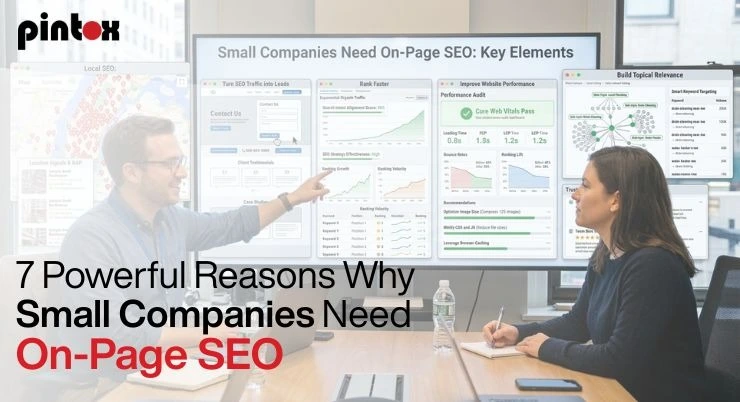
Small companies don’t have time to waste on guesswork. On-page SEO gives you control over what your website tells Google. It also shapes what customers see before they contact you. When your pages match real search intent, you earn better placement. That leads to more qualified traffic from people ready to buy.
The goal is not “more clicks” alone. It’s more calls, more form fills, and more booked appointments. The seven reasons below show how on-page improvements drive those outcomes. Each one is practical, measurable, and built for small business growth.
7 Powerful Benefits of SEO for Small Business (Focused on On-Page Wins)
On-page SEO is where most small companies can improve the fastest. It does not require chasing backlinks or waiting months for results. You can tighten pages, fix gaps, and measure progress quickly. These are the benefits of seo for small businesses when you focus on on-page wins. Each reason below ties to rankings and real leads, not vanity metrics.
Win more “near me” clicks with local SEO optimization signals on-page
Most local customers search with a city name or “near me.” Your pages must make location relevance obvious. Add service areas in headings and supporting text, not just the footer. Make sure your NAP details match everywhere on your site. NAP means your name, address, and phone number. Use clear location modifiers like “in Austin” or “serving Phoenix.” Do this in a natural way that reads well. Use keyword targeting to connect each service to each location. Also, add internal links between related services and locations. That strengthens the context for Google and users. When the signals are consistent, organic search visibility improves. You also earn more clicks from people ready to call today.
Turn SEO traffic into leads with a conversion-focused page structure
Ranking is only half the job. Your page must quickly answer, “Can this business help me?” Start with a clear offer above the fold. Tell visitors what you do and who it’s for. Add trust blocks close to the top. Use reviews, certifications, and real results when you have them. Keep the next step simple. A phone button, short form, or booking link works best. Remove extra choices that slow people down. This approach is often the best way to market a small business online. You turn search traffic into calls and forms, not just pageviews. That is where on-page work pays back fast.
Rank faster by aligning content with search intent and SEO strategy
Many pages fail because they target the wrong intent. A shopper needs a service page, not a long blog post. A researcher needs clear answers, not a hard sales pitch. Match the page to what the searcher wants next. Build an SEO strategy around the page’s purpose. Create service pages for “hire” intent and blogs for “learn” intent. Then connect them with smart internal links. This reduces confusion for Google and users. If you’ve ever asked, “seo for my small business feels slow,” this is why. The right intent match can speed up ranking gains. It also brings in leads that convert at higher rates.
Improve website performance to reduce bounce rates and lift rankings
People leave slow websites fast. That hurts leads and can weaken rankings over time. To improve website performance, start with mobile speed. Compress images and remove heavy scripts when possible. Make pages easy to scroll and tap on a phone. Keep your layout clean and avoid popups that block content. Google also looks at SEO ranking factors tied to user experience. That includes load time and visual stability. If crawl or indexing issues exist, rankings can stall. A technical review helps you spot these problems early.
Build topical relevance with internal linking and smart keyword targeting
Small companies win by owning a clear topic, not everything. Build a cluster around your core services. Write one strong service page, then support it with related blogs. Link blogs back to the service page with natural anchor text. Also, link between related services when it helps the user. This structure teaches Google what you are known for. It also guides visitors toward the next step. Internal linking is one of the simplest on-page upgrades. It helps both rankings and conversions when done thoughtfully. This is a key part of Organic Search Engine Optimization. Paid ads stop when you stop paying. Organic growth keeps working when your pages stay strong.
Earn more trust with clearer pages, better UX, and stronger on-page credibility
Trust is a ranking signal and a sales signal. Visitors want proof before they contact a small company.
Use a user-friendly website design that feels clean and professional. Add real photos when you can, not only stock images. Include clear service details, pricing ranges, or process steps when possible. Show reviews, awards, and case studies where they fit naturally. Add FAQs to remove doubt before someone calls. If you have experts, show names and experience. These details support search engine optimization for growth. They also reduce “bounce and shop” behavior. Clear pages build confidence and increase booked appointments.
Make paid + search engine marketing for small businesses work harder with better landing pages
Paid traffic is expensive if the page is weak. Many campaigns fail because the landing page does not match the ad. On-page fixes make your offers clearer and your pages easier to trust. That often improves conversion rate without raising ad spend. It can also lift Quality Score on some platforms. Keep one goal per landing page. Use one offer, one action, and one simple message. Answer the top objections fast. Add proof close to the form or call button. This is how search engine marketing for small businesses becomes more profitable. Better pages mean fewer wasted clicks and more real leads.
On-Page SEO Checklist for Small Companies
If you want quick wins, use this checklist as your starting point. It focuses on on-page SEO items that impact rankings and conversions. Fix the “Critical” items first, then move down the list. This order follows real SEO ranking factors, not theory. It also protects organic search visibility while you improve pages. Use keyword targeting with a light touch. Write for people first, then tighten for Google. As you go, watch speed and mobile usability to improve website performance.
Element | Why it matters (rankings/conversions) | Priority | DIY or Hire | Tool/Method |
| Title tag | Drives clicks and clarifies the page topic | Critical | DIY | Google Search Console + SERP review |
H1 | Confirms page focus and improves readability | Critical | DIY | Page template check |
| Meta description | Improves click-through and sets expectations | High | DIY | Write a benefit-led summary |
Headers (H2/H3) | Organizes content and supports intent matching | High | DIY | Outline first, then write |
| Internal links | Builds topical relevance and guides users to act | High | DIY | Link map by service and topic |
Image alt text | Helps accessibility and adds context signals | Nice-to-have | DIY | Add short, descriptive alt text |
| Schema | Can improve rich results and clarity | High | Hire (often) | Schema plugin or JSON-LD |
Page speed | Reduces bounces and supports UX signals | Critical | Hire if needed | PageSpeed Insights + CWV basics |
| Content refresh | Keeps pages accurate and competitive | High | DIY | Update quarterly, improve depth |
DIY vs Hiring: Affordable Small Business Search Engine Optimization That Actually Performs
Some small companies can handle on-page work in-house. Others need help to move faster and avoid costly mistakes. The right choice depends on time, skills, and consistency. What matters most is steady execution, not one-time edits.
When DIY works (and when it wastes time)
DIY can work if you have someone who owns the process. They need basic SEO knowledge and time each week. They also need access to your website and analytics tools. DIY often fails when tasks get pushed behind daily operations. It also fails when changes are made without tracking results. If you cannot write, update, and test pages consistently, progress slows. In that case, you may spend months with little improvement. A simple system beats random “SEO tips” every time.
What to expect from the best SEO company for small businesses
A strong partner starts with an audit, not guesses. They identify what blocks rankings and what blocks conversions. Then they handle on-page fixes with clear priorities. You should also get a content plan tied to real searches. Reporting should be simple and business-focused. Think rankings, traffic quality, leads, and booked calls. The best seo company for small businesses explains work. A reliable seo company for small businesses also shows you what changed and why.
Content Optimization That Builds Organic Search Visibility Over Time
On-page fixes help fast, but content is what keeps growth steady. Good content answers real questions your buyers search for every day. It also gives you more pages to rank and more chances to convert. Over time, that builds stronger organic search visibility without relying on ads.
How content marketing and SEO work together to compound results
SEO tells you what people want. Content gives them the best answer on your site. When those two work together, rankings become more stable. Your blog posts can support service pages with internal links. Your service pages can then capture high-intent leads. This creates a simple loop that grows month after month. You also earn trust before someone calls or fills a form. That’s the real power of content marketing and SEO working together.
Simple reporting small companies should track (traffic ? leads ? booked calls)
Keep reporting tied to revenue, not vanity numbers. Start with organic traffic by page and by service.
Then track form fills, calls, and booking requests from those pages. If you use a CRM, tag leads by source when possible. Watch conversion rate, not only rankings. Also measure speed-to-lead, because fast follow-up wins deals. When you connect traffic to leads to booked calls, SEO becomes a lead engine.
FAQs About On-Page SEO for Small Businesses
What is on-page SEO for small businesses?
On-page SEO is the work you do on your website pages to rank and convert. It includes titles, headings, content, internal links, and basic technical items like speed.
Why is on-page SEO important for small companies?
It helps your site show up for high-intent searches and look credible when people click. Small improvements can increase calls, form fills, and bookings without increasing ad spend.
How does on-page SEO help small businesses rank on Google?
It makes your page more relevant to a specific search and easier for Google to understand. Clear structure, helpful content, and strong user experience improve key ranking signals over time.
What are the key elements of on-page SEO for small companies?
Focus on title tags, H1 and headings, meta descriptions, and content that matches search intent. Add internal links, descriptive image alt text, and fast mobile performance for stronger results.
How can on-page SEO increase website traffic for small businesses?
Better on-page signals improve rankings and click-through rates for the terms you want. When pages answer questions clearly, you also win more long-tail searches that add steady traffic. This becomes easier when you understand key seo terms and apply them correctly.
Can small businesses compete with large companies using on-page SEO?
Yes, because small businesses can be more focused and more specific. Strong local pages, clear service pages, and helpful content often beat larger sites that feel generic.
How do keywords improve on-page SEO for small companies?
Keywords tell Google what a page is about and help match it to searches. Use keyword targeting naturally in titles, headings, and body text, while keeping the writing clear.
What role do meta tags play in on-page SEO?
Title tags and meta descriptions shape how your page appears in Google results. A strong title improves relevance, and a clear description increases clicks from qualified searchers.
How does content optimization improve on-page SEO?
Content optimization makes pages clearer, more complete, and easier to scan. It removes fluff, answers real questions, and adds structure, which helps rankings and improves conversion rates.
Why is internal linking important for on-page SEO?
Internal links help Google find your pages and understand how topics connect. They also guide visitors toward the next step, like a service page or booking action.
Next Steps: A Simple On-Page SEO Strategy You Can Apply This Week
You do not need a perfect website to see progress. You need a clear SEO strategy and consistent action. These steps keep work focused and easy to measure. They also support search engine optimization for growth, not just rankings. That’s the importance of seo for business in 2026 and beyond.
3-step starter plan (today / this week / this month)
Today: Pick one core service page to improve first. Rewrite the title and H1 to match real search intent. Add one clear offer and a simple next step.
This week: Add internal links from related pages to that service page. Tighten headings and remove filler text that adds no value. Check mobile speed and fix the biggest page issues.
This month: Refresh content that is outdated or thin. Publish one helpful support article that answers a common buyer question. Track calls, forms, and booked appointments from organic traffic.
Ready to stop guessing and start ranking + converting? Get help from Pintox Digital. Explore our SEO Services to get a done-for-you plan. If you want proof of the process, review our technical audit approach as well.