
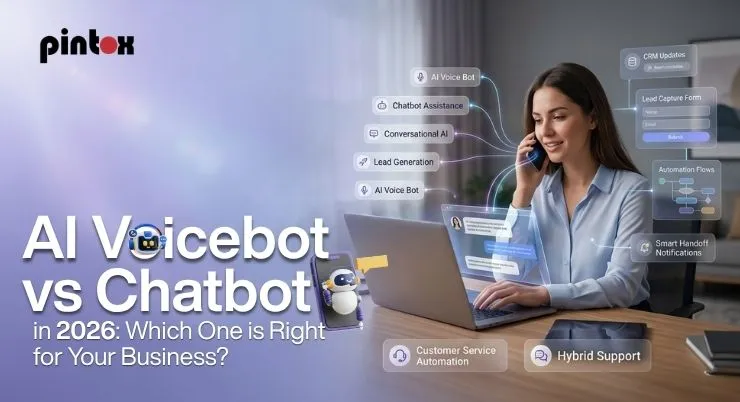
If your business relies on calls, missed calls cost money. If your customers prefer texting, slow replies lose leads. In 2026, the right automation depends on channel and intent. This guide helps you choose fast and implement correctly. You will also see when a hybrid setup works best.
Want help picking the right setup for your funnel? Book a free strategy call and get a clear plan.
The 2026 Decision Framework (Answer in 2 Minutes)
Most businesses do not need a complicated answer. They need the right tool for the job. Start with how customers reach you today.
Choose Voice When It Fits Urgent Needs (Voice-based Communication)
Voice wins when customers want immediate help. It also wins when typing feels slow or unsafe. That is common during driving or hands-free work.
Use a voice solution when you need:
- Faster response for inbound calls
- A strong first impression on the phone
- High-intent conversations that lead to bookings
- Real-time interaction that feels natural
- Clear routing to a human when needed
Voice systems depend on speech recognition and call flows. They also rely on natural language understanding to handle variations.
Choose Chat When Text Works Better (Text-based Communication)
Chat wins when customers are browsing or comparing options. It also wins when questions are simple and repetitive. It reduces pressure and keeps the interaction quiet.
Use a website chatbot or messaging app chatbot when you need:
- Quick answers to common questions
- FAQ automation that runs 24/7
- Self-service support for simple requests
- Lead capture during after-hours traffic
- Short, clear steps for quotes and availability
Not sure yet? Keep reading and use the scorecard logic in the table below.
AI Voicebot vs Chatbot: What’s the Real Difference?
Both tools automate conversations using conversational AI. But they behave differently in real customer moments. Voice has urgency and emotion. Chat has convenience and control.
How AI Voice Bots Work (AI Phone Bot Basics)
An AI voice bot listens, understands, and responds. It often uses this pipeline:
- Speech recognition to turn audio into text
- Intent detection and entity extraction
- Dialog logic for next best questions
- A response engine with text-to-speech output
A strong AI phone bot also follows guardrails. It confirms details and avoids risky assumptions. It knows when to escalate.
How Chatbots Work (Conversational Chatbots in Practice)
A chatbot assistant usually starts on your website or inbox. It can be rules-based, AI-based, or hybrid. In 2026, many are AI-enabled.
Conversational chatbots handle:
- Guided menus for common paths
- Natural language questions with flexible answers
- Lead qualification with short forms
- High-volume query handling during spikes
Chat is also easier to test and refine. You can see transcripts fast and adjust quickly.
The Biggest Practical Difference: Expectations and Context
When someone calls, they expect a human-level experience. They will not tolerate delays or confusion. That is why voice needs a tighter design.
When someone chats, they accept step-by-step prompts. They also accept quick links and short confirmations. Both affect customer experience (CX) differently.
Voice vs Chat Across 10 Business Factors
Factor | Voice Bot | Chatbot | Best For |
| Lead capture speed | Answers calls instantly | Captures web leads | Lead generation automation |
Customer engagement | High trust in voice | High convenience in text | Mixed audiences |
| Call center automation | Strong fit for call routing | Limited to text channels | Phone-first teams |
Self-service support | Good for simple tasks | Great for FAQs | Support-heavy businesses |
| 24/7 customer support | Excellent for after-hours calls | Excellent for after-hours chat | Always-on coverage |
Appointment scheduling | Strong if integrated with calendars | Strong with forms and links | Booking-based businesses |
| Omnichannel support | Best with SMS handoffs | Best across inboxes | Multi-channel brands |
Technical complexity | Higher build and QA needs | Lower build and QA needs | Fast launches |
| Cost-effective automation | Higher per-minute costs | Lower per chat costs | Budget-sensitive teams |
High-volume query handling | Limited by call minutes | Scales well in text | Traffic spikes |
If you want clarity on your best option, use a short scorecard. Pick voice if calls are your main revenue path. Pick chat if web inquiries drive most deals. Pick a hybrid if both channels matter.
Business Use Cases for Companies (Where Each Wins)
Different businesses win with different channels. Use cases matter more than features.
Lead Gen and Sales Conversations (Lead Generation Automation)
Voice wins when inbound calls drive your sales. That is common in home services and local providers. It is also common in clinics and consult-based businesses.
Voice can:
- Answer missed calls instantly
- Qualify urgency and service type
- Route to the right team member
- Collect details for a follow-up
- Trigger lead generation automation in your CRM
Chat works best for website leads and quote requests. It can gather details without a phone call. It can also push booking links fast.
Customer Support and Service Requests (Customer Service Automation)
Chat often wins for routine support. It handles order status, FAQs, and policy questions well. That is strong for AI customer support. Voice wins for sensitive or urgent service requests. It can triage issues and calm customers. It can also gather details hands-free, which is why AI Voice Bots Are Transforming Customer Service for many growing teams.
Appointments and Local Services (Appointment Scheduling)
Appointment scheduling is a top 2026 use case. Voice works well when callers want a human feel. Chat works well when customers want quick options.
Common USA-friendly examples include:
- HVAC and plumbing scheduling
- Med spa availability checks
- Dental reminders and reschedules
- Legal intake and consult booking
- Real estate showing requests
Hybrid Approach in 2026 (The Best of Both Model)
Many businesses do not need a single channel. They need a system that follows customer preferences. That is where a hybrid chatbot voicebot approach wins.
Hybrid Chatbot Voicebot Routing
A hybrid setup can start in chat and move to voice. It can also start in voice and move to text.
Common hybrid flows include:
- Website chatbot captures a lead, then schedules a call
- AI voice bot answers, then sends SMS with a booking link
- Chat handles FAQs, then escalates to a live call
- Voice handles triage, then hands off to a human agent
This approach improves omnichannel support. It also protects CX during peak volume.
What a Good Handoff Looks Like
Handoffs should feel smooth. They should not force the customer to repeat everything. They should also store context in their CRM.
A strong handoff includes:
- A summary of the issue
- The customer’s name and contact details
- Any booked slot or requested time
- The next best action for the staff
Cost, Complexity, and ROI (What Actually Drives the Numbers)
Cost questions are normal. But most articles stay vague. Here is what really changes cost and ROI.
What Makes Voice More Complex (Technical Complexity)
Voice systems require heavier QA and edge-case planning. They also require careful prompts and safe confirmations.
Costs rise with:
- Call minutes and peak call volume
- Speech recognition quality needs
- Natural language understanding tuning
- Complex routing and compliance logic
- Integration work for calendars and CRMs
Voice can still be a cost-effective automation. But it must reduce lost calls or staff time. Otherwise, it becomes a fancy receptionist.
When Chat Is the Better ROI
Chat usually costs less to run. It also scales better for high-volume query handling. That makes it ideal for routine questions.
Chat ROI rises when it:
- Reduces tickets and call volume
- Captures web leads after hours
- Improves response time on pages
- Increases conversions with fast answers
Implementation Checklist (So It Converts, Not Just “Talks”)
The tool is not the strategy. The workflow is the strategy. Build around outcomes, not novelty.
Build the Flow (FAQ Automation and Appointment Scheduling)
Start by mapping your top intents. Then define how each intent ends.
For voice and chat, you need:
- Top 10 customer questions and requests
- Approved answers and boundaries
- Booking rules and service areas
- A fallback route for confusion
- A clear “talk to a human” path
Keep scripts simple and clear. Short prompts reduce errors. They also reduce frustration.
Integrations That Matter (Call Center Automation and Lead Generation Automation)
Automation must connect to your systems.
Otherwise, leads fall through gaps.
Prioritize:
- CRM pipeline updates
- Lead source tracking
- Call summaries and transcripts
- Task creation for follow-up
- Appointment scheduling updates
- Notifications to the right team
This is where “voice-based chatbot” ideas often fail. Many teams add voice without workflow design. They also add a chatbot with voice, but no routing logic.
What to Track (Customer Engagement and CX)
Track outcomes, not vanity metrics. You want clarity on revenue impact.
Use these KPIs:
- Answer rate for inbound calls
- Booking rate per channel
- Speed-to-lead for new inquiries
- Handoff rate to humans
- Containment rate for support requests
- Cost per booked appointment
Common Mistakes Businesses Make (And How to Avoid Them)
Mistakes kill ROI fast. Most are easy to prevent.
Avoid these issues:
- No human fallback for complex cases
- Overpromising what the bot can do
- Poor data, stale hours, and wrong services
- No monitoring or weekly improvements
- No CRM updates after each interaction
- No clear opt-in rules for follow-up messages
Also, avoid confusing labeling. People search for “voice-based chatbots” and expect magic. They also search “chatbot and voicebot” as if they are identical. In reality, use cases decide the winner.
FAQ’s
What is the difference between an AI voice bot and a chatbot?
An AI voice bot talks on the phone. A chatbot talks through text. Voice is stronger for urgent, high-intent moments. Chat is stronger for quick, self-serve requests.
How do AI voice bots and chatbots work in customer service?
Both automate common requests and route edge cases. Voice often supports call center automation and routing. Chat often supports FAQ automation and ticket deflection. Both improve customer service automation when integrated well.
Which is better for business in 2026: an AI voice bot or a chatbot?
It depends on your customers and your channel mix. If calls drive revenue, voicebot vs chatbot usually favors voice. If web inquiries drive revenue, chatbot vs voicebot often favors chat. Many teams win with a hybrid chatbot voicebot model.
When should a business use an AI voice bot instead of a chatbot?
Use voice when urgency is high. Use voice when customers already call first. Use voice when hands-free communication matters. Use voice when appointment scheduling happens by phone.
What are the benefits of AI voice bots compared to chatbots?
AI voice bot benefits include:
- Capturing missed calls instantly
- Improving customer engagement on phone-first journeys
- Supporting voice-based communication for urgent needs
- Creating a more personal experience
- Reducing staff time on repetitive calls
Chat benefits include lower cost and fast scaling. That is why conversational AI and chatbots still matter.
Final Recommendation
If your business depends on calls, start with voice. If your business depends on web traffic, start with chat. If both matter, build a hybrid system.
The best results come from workflow design and integration. That includes routing, follow-up, and CRM updates. It also includes clear guardrails and ongoing improvement.
Want a clean recommendation for your business? Book a free strategy call. You will leave with a channel plan and next steps, including whether AI Voice Bot Development makes sense for your customer experience goals.