Choosing a CRM can make or break an agency’s delivery. The wrong tool slows follow-up and hurts retention. The right tool tightens operations and protects margins.
This guide compares both platforms for real agency work. You’ll see where each one shines. You’ll also see where each one gets in the way.
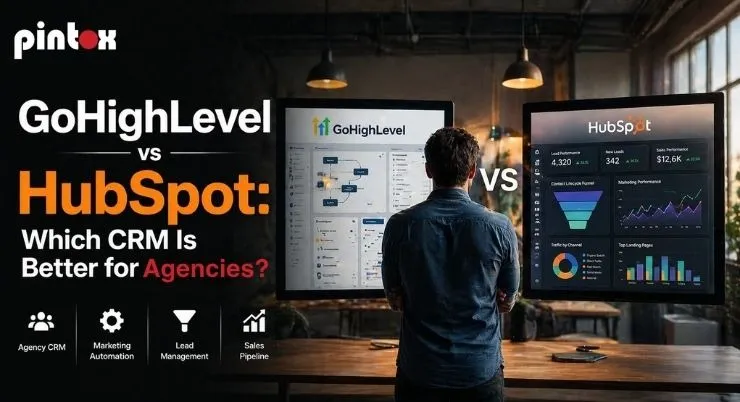
GoHighLevel vs HubSpot: Quick Verdict for Agencies
Most marketing agencies want two outcomes fast. They want more leads to convert. They want smoother client delivery.
If you want speed and automation, HighLevel often wins. If you want deep reporting and scale controls, HubSpot often wins. That’s the short version.
Best for most marketing agencies (fast take)
For many teams, the choice depends on your delivery model. If you sell lead gen and follow-up, HighLevel usually fits better. If you sell complex lifecycle tracking, HubSpot can be stronger.
You’ll also see this written as go high level vs hubspot online. You may also see HubSpot vs. GoHighLevel in agency groups. Both refer to the same comparison.
When HubSpot is the smarter fit
HubSpot can be a great CRM for digital marketing agencies with larger teams. It’s strong for structured pipelines and analytics-heavy ops. It also supports complex permissions and governance.
When GoHighLevel is the smarter fit
HighLevel is built for fast launches and client delivery systems. It supports multi-client setups and automations out of the box. That makes it popular as agency CRM software.
Want a clear recommendation for your agency model? Book a free CRM fit check and get a simple rollout plan.
What Agencies Actually Need From a CRM (Not Just Features)
Agencies do not need “every feature.” They need fewer moving parts and clean handoffs. They need systems that the team will actually use.
Best CRM for agencies starts with workflow, not software
The best CRM for agencies supports your sales motion. It also supports your fulfillment motion. That means leads, deals, delivery, and renewals.
Ask these questions first:
- How do leads enter your pipeline?
- Who follows up, and how fast?
- What gets tracked per client?
- What does reporting need to show?
Client management and multi-client visibility
If you serve many accounts, you need strong visibility. That includes client pipelines, tasks, and communication logs. A multi-client CRM for agencies helps prevent missed follow-ups.
Look for:
- Clean pipeline stages
- Client notes and approvals
- Shared inbox or conversation history
- Simple handoffs between roles
That is the core client management CRM for agencies’ value.
Lead capture, follow-up to appointment, and reporting
Most agencies leak leads between steps. Speed-to-lead is usually the problem. Tracking is usually the second problem.
For CRM for lead generation agencies, follow-up automation matters. For CRM for service businesses’ clients, appointment workflows matter. You want both to run with minimal manual work.
HighLevel vs HubSpot for Agencies: Core Differences That Matter
Both tools can run a pipeline. The question is how they support agency delivery. The real difference is how they are built.
All-in-one platform vs modular ecosystem
HighLevel is closer to an all-in-one CRM for agencies. It bundles funnels, automations, messaging, and pipelines. That can reduce your tool stack.
HubSpot is more modular. It shines when you want a connected ecosystem. It can be ideal for teams using many tools.
Execution speed vs depth for agency teams
For CRM for marketing agencies, speed matters. HighLevel often helps you launch faster. HubSpot often gives you deeper reporting.
For CRM for digital marketing agencies, both can work. Your choice depends on your client type. It also depends on your team’s process maturity.
Which CRM is better for agencies depends on the delivery
Which CRM is better for agencies is not a universal answer. It depends on what you sell. It depends on what you need to standardize.
If you want repeatable client setups, HighLevel can help. If you need advanced lifecycle analytics, HubSpot can help. That’s the heart of a marketing agency CRM comparison.
HubSpot vs GoHighLevel Features: Side-by-Side Comparison
Feature | HighLevel | HubSpot |
| Multi-client account structure | Strong for agency use | Possible, but depends on the setup |
White label options | Strong | Limited |
| Funnel builder | Strong | Available, but a different approach |
CRM with pipeline management | Built-in and simple | Built-in and mature |
| CRM with SMS automation | Strong | Possible with tools and settings |
Email automation | Strong | Strong |
| Calling and tracking | Strong | Strong |
Appointment scheduling | Strong | Strong |
| HubSpot integrations | Good | Very strong |
Reporting depth | Good | Very strong |
| Permissions and governance | Good | Strong |
Agency SaaS reselling | Strong | Not designed for this |
Pipeline management and lead tracking for agency operations
Both platforms support CRM with pipeline management. HubSpot can feel cleaner for larger sales teams. HighLevel can feel faster for lean teams.
Key pipeline needs for agencies:
- Clear stages your team follows
- Tasks tied to stage movement
- Lead source tracking
- A simple “next action” field
Funnel builder and landing pages when it matters
Many agencies need landing pages for campaigns. That’s where an agency funnel builder CRM can matter. HighLevel often covers this in one place.
If your agency uses funnel-heavy offers, compare build speed. Also, compare tracking and form routing. Those details affect results more than “templates.”
GoHighLevel Pricing vs HubSpot Pricing: What Agencies Really Pay
Pricing is rarely the sticker price. It’s cost plus time plus friction. It’s also the cost of adoption.
HubSpot’s cost drivers: seats, hubs, and contacts
HubSpot pricing can scale in layers. You may pay for seats and hubs. You may also pay based on marketing contacts.
That matters for HubSpot vs. GoHighLevel comparisons. It also shows up in HubSpot vs. GoHighLevel comparison discussions. The total depends on your setup and list size.
HighLevel’s cost drivers: plan level and usage
High-level pricing is often simpler up front. But usage-based items can add cost later. That includes messaging and some add-ons.
When people search for GoHighLevel vs. HubSpot comparison, pricing is a major driver. The key is predictable cost per client. That is what agencies care about.
Unlimited users and contacts in real life
Many agencies want a CRM with unlimited users. They also want a CRM with unlimited contacts. That can reduce scaling headaches.
Still, read plan terms carefully. Usage limits can shift costs in other ways. A quick ROI check helps.
GoHighLevel for Agencies: White Label, Multi-Account, and Automation Strengths
HighLevel was designed for agencies and service businesses. It focuses on repeatable client systems. That is why many teams choose GoHighLevel for agencies.
White-label CRM for agencies and brand control
A white-label CRM for agencies can improve retention. Clients see your brand, not a generic tool. That can strengthen trust and reduce churn.
GoHighLevel white-label features can include:
- Branded login and domain
- Branded client dashboards
- Resell-style packaging for services
Marketing automation platform for agencies
Agencies win when follow-up is fast and consistent. That is the core of an agency marketing automation platform. It supports speed-to-lead and nurture.
HighLevel is known for CRM with SMS automation. That matters for appointment-based funnels. It also matters for lead-gen campaigns.
Practical agency workflows to automate first
Start with what drives revenue. Avoid building fancy workflows too early. Launch these first:
- Missed-call text back
- New lead welcome sequence
- Appointment reminders
- No-show follow-up sequence
- Stage-change notifications
- Review the request after the service
HubSpot for Agencies: When You Need Enterprise-Grade CRM and Reporting
HubSpot for agencies often works best on a larger scale. It’s strong for clean data and strong reporting. It also supports more complex team structures.
Integration strength and ecosystem fit
HubSpot integrations are one of its biggest wins. If your stack is deep, that matters. It can reduce custom work.
This is a big point in HubSpot vs. GHL debates. Integrations can lower operational friction. They can also support better attribution.
Reporting, lifecycle tracking, and governance
HubSpot can be great for lifecycle analytics. It supports structured properties and dashboards. That can help larger teams stay aligned.
For the best CRM for digital agencies, reporting often drives the decision. If your agency sells analytics-heavy retainers, consider HubSpot. It can support clearer performance reviews.
Where HubSpot can slow agencies down
HubSpot can require more setup and admin time. Seat costs can rise as teams grow. Customization can drift without strong governance.
Best CRM for Marketing Agencies: Use-Case Recommendations
Choose your lane based on how your agency works. If you run a lead-gen agency, speed matters most. You need fast lead routing, follow-up, and clear pipeline visibility.
HighLevel is often a strong fit because it supports SMS automation, appointment flows, and repeatable client systems.
If your agency is fulfillment-heavy, structure matters more. You may need detailed reporting, team accountability, and better permissions. In that case, Salesforce or HubSpot can be a better fit for larger teams with more complex workflows.
If you serve service businesses, bookings, reminders, and missed-call recovery matter most. HighLevel works well here because it keeps communication and scheduling in one place.
That’s why many agencies compare GoHighLevel vs ClickFunnels for funnel-first needs, and GoHighLevel vs Salesforce when deciding between automation speed and enterprise depth.
Migration and Setup: How Agencies Switch Without Losing Leads
Switching CRMs can feel risky. It does not need to be painful. You just need a plan.
What to migrate
Move what you actually use. Do not migrate old clutter. Start with these:
- Pipelines and stages
- Tags and lead sources
- Automations and sequences
- Forms and booking links
- Reporting dashboards that drive decisions
Common migration mistakes
These errors cause chaos fast:
- Migrating every old field
- Skipping lead source mapping
- Forgetting follow-up rules
- Not training the team
A simple 14-day rollout plan
- Days 1–3: Map pipeline and lead sources.
- Days 4–7: Build core automations and templates.
- Days 8–10: Import leads and test routing.
- Days 11–14: Train team and go live.
GoHighLevel Alternatives for Agencies
Sometimes neither tool is perfect. Your agency model may need something different. It helps to know the common alternatives.
When funnel-first stacks win
If your agency is funnel-heavy, compare funnel builders closely. In some cases, a funnel-first stack can be simpler.
When to consider other options
Consider alternatives when:
- You need niche compliance features
- You need advanced custom objects
- Your clients demand a specific ecosystem
Choose the Right CRM Without Guesswork
You do not need more opinions. You need to know if the platform fits your workflow. GoHighLevel is worth it if you want one system for leads, follow-up, booking, and automation. A short audit can help you decide fast. That’s the simplest way to answer: Is GoHighLevel Worth It?
Free CRM fit check and setup roadmap
If you want a clear answer, we can help. You’ll get a recommendation and rollout plan. You’ll also get a cost estimate per client.
Book a free strategy call and CRM fit check today.
FAQs: GoHighLevel vs HubSpot for Agencies
What is the difference between GoHighLevel and HubSpot for agencies?
HighLevel is more agency-system focused. HubSpot is more analytics and ecosystem-focused. HighLevel can launch faster for client delivery.
Which CRM is better for marketing agencies: GoHighLevel or HubSpot?
It depends on your service model. HighLevel often fits lead-gen and automation packages. HubSpot often fits reporting-heavy and larger teams.
Is GoHighLevel more affordable than HubSpot for agencies?
Often, yes, for many agencies. But usage costs can add up in some cases. HubSpot costs can rise with seats and contacts.
Does GoHighLevel offer better value for agencies than HubSpot?
Value depends on what you need. HighLevel can be a strong value for multi-client operations. HubSpot can be a strong value for deep reporting needs.
What are the pros and cons of GoHighLevel vs HubSpot for agencies?
- HighLevel pros: fast launches, automations, agency tools, white label options.
- HighLevel cons: reporting depth may feel lighter for some teams
- HubSpot pros: integrations, reporting, structured governance, mature CRM features.
- HubSpot cons: cost scaling and admin overhead for some agencies.
Final Recommendation (Based on Your Agency Model)
Choose HighLevel if you want faster automation and repeatable client systems. Choose HubSpot if you need deeper reporting and a broader integrations ecosystem. For businesses comparing tools and looking for hands-on support, GoHighLevel services can help you set up the right system and decide which platform fits best.