
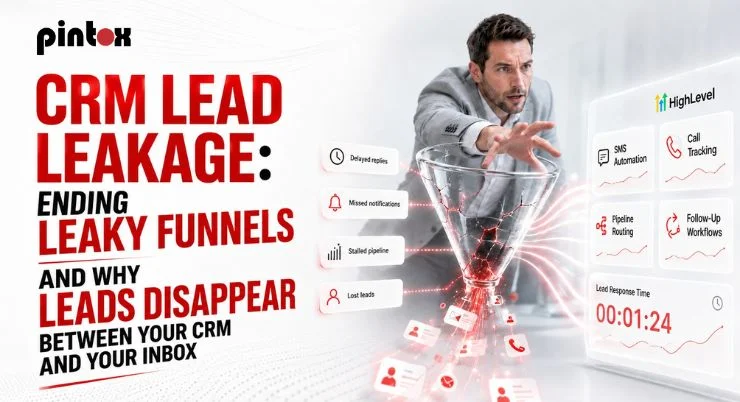
A lead should never vanish after they raise their hand. Yet it happens daily in USA businesses. You pay for clicks, calls, and forms. Then the prospect disappears between your CRM and your inbox.
This is lead leakage in plain terms. It shows up as missed replies, unworked inquiries, and quiet pipelines. It also looks like a “bad lead” that was never contacted. That is money leaking from your sales funnel.
In this guide, you will learn a simple system. You will spot funnel leaks fast. You will fix mid-funnel leaks with better lead management. You will also prevent future sales leakage with automation.
Want a second set of eyes? Request a lead leakage audit and get a clear fix list.
What Is Lead Leakage (And What It Looks Like Inside a Leaky Sales Funnel)
Lead leakage is a lost opportunity after someone shows interest. The prospect may be a good fit. The buying intent may be high. But your process fails before a real conversation starts.
Some drop-off is normal in the buyer’s journey. Lead leakage is different. It is an avoidable loss caused by broken steps. It hurts your conversion rate and your buying experience.
Common signs you have funnel leaks
- Leads show up in forms, but not in the CRM.
- Emails arrive, but the salesperson never responds.
- Calls are missed, and no one texts back.
- Records duplicate, and routing fails.
- Prospects reply, but replies stay buried in inboxes.
- Deals stall with no next step.
These are not “marketing problems” alone. They are lead management problems. They also signal weak sales engagement and unclear ownership.
Why Leads Disappear Between Your CRM and Your Inbox
Most leaks happen in the handoff. That handoff can be between tools. It can also be between people. Both create silence.
Broken routing and ownership gaps
A lead can land in the wrong pipeline. It can also land with the wrong rep. That happens when your lead persona rules are unclear. It also happens when your ICP definition is loose.
Ownership gaps are deadly. If “someone” owns the lead, no one does. A lead should always have one owner. Backups should exist for weekends and meetings.
Inbox overload and missed notifications
Inboxes are noisy. Filters and rules can hide important replies. Some emails go to promotions or spam. Some land in shared mailboxes without a clear owner.
Many teams rely on “new email” as their alert. That is fragile. A CRM should track and surface lead intent signals. It should also log conversations for reporting dashboards.
Speed-to-lead failures
Time kills deals. Most USA buyers contact multiple vendors quickly. A slow reply can lose the sale in minutes.
If this is a recurring issue, fix it first. Start with your lead response time system. Use a simple standard and enforce it.
The Real Causes of Sales Funnel Leakage Across the Sales Cycle
Lead leakage is rarely one mistake. It is usually a stack of small gaps. Those gaps compound across the sales cycle. Then your pipeline looks weaker than it should.
Lead quality issues and targeting gaps
Bad targeting creates unqualified leads. It also inflates the cost per lead. That wastes your marketing budget fast.
Fix your target market first. Tighten your ideal customer profile. Define your ICP with clear, firm, and buyer traits. Track which sources create qualified leads.
Also watch for lead quality drift. It happens when ads scale too fast. It also happens when the landing page conversion is optimized for volume only. That creates leads that never become sales-ready leads.
CRM hygiene issues and cleansing of leads
Dirty data creates silent leaks. Duplicates split conversations. Missing fields break routing. Old tags confuse automation.
This is where cleansing of leads matters. Clean your marketable database monthly. Use data enrichment when key fields are missing. Then your lead management CRM becomes reliable.
Process drift and alignment gaps
Many leaks are human. Marketing generates leads. Sales works them. But the two teams run different definitions.
Marketing and sales alignment fixes this. Agree on lead stages and handoff rules. Write a simple SLA for timely follow-up. Then measure compliance every week.
This is part of your go-to-market processes. Without it, you will always leak revenue. Even with great marketing automation.
Lead Leakage Audit: Where to Look and What to Measure
You do not fix what you cannot see. So start with a quick audit. Look for the exact point where leads disappear. Then fix that point first.
Below is a simple table you can use today. It works for service businesses and B2B teams. It also fits most RevTech stack setups.
Leak Point | What You’ll See | Why It Happens | Fix |
| Lead captured but not in CRM | Form shows leads, CRM does not | Integration failed | Repair the connection and add monitoring |
Lead created but not assigned | “Unassigned” queue grows | Routing rules missing | Add round robin and backups |
| Assigned but no contact | No calls, no emails logged | No SLA or weak habits | Set SLA and auto-tasks |
Reply happens outside CRM | Rep replies in the inbox only | CRM is not used for engagement | Sync email and log activity |
| Missed call with no follow-up | Call log exists, no next step | No missed-call text-back | Auto SMS and task creation |
Duplicate records | Two contacts, split notes | No duplicate checks | Merge rules and cleansing of leads |
| No source tracking | “Unknown” source fields | Missing UTM and mapping | Standardize crm lead tracking fields |
Stalled stages | Deals sit without movement | No exit criteria | Add stage rules and reminders |
| Demo requests ignored | Form submitted, no meeting set | Handoff gap | Auto booking link and alerts |
Cold leads are never reworked | Dead pipeline, no nurture | No re-nurturing plan | Build lead nurturing sequences |
Track a few metrics during this audit. Measure response time by source. Measure contact rate within 15 minutes. Measure stage aging and conversion rate by stage.
Want help running this audit? Request a quick review and get a clear scorecard.
How to Fix Mid-Funnel Leaks With Better Lead Management
Once you find the leak point, fix the process first. Then add automation. Process without automation breaks under stress. Automation without process creates chaos.
Define stages and exit criteria
Stage names should mean something. Every stage needs an entry rule. Every stage needs an exit rule. This reduces sales funnel leakage.
Also, define qualified leads clearly. Define unqualified leads, too. That protects the salesperson’s time. It also improves the accuracy of forecasting tools.
Use these stage checks:
- Fit: match ICP and target market.
- Intent: clear buyers’ signals or buying intent.
- Timing: near-term need or nurture required.
- Contact: two-way engagement started.
This also supports re-qualifying later. Some leads are “not now,” not “never.” Those should stay in nurture leads lists.
Set SLAs and escalation rules
Your SLA should be simple. It should be visible in the CRM. It should trigger tasks automatically.
A strong baseline is fast. Five minutes is ideal for high-intent leads. Fifteen minutes is still workable for many industries. Anything beyond that risks leading to leakage.
Add escalation. If no action happens, notify a manager. Or reassign to a backup rep. This is a basic lead management CRM discipline.
Standardize outreach processes
A lead should not depend on one rep’s style. Use simple outreach processes that work. Keep them consistent across sources.
Here is a practical cadence:
- Minute 0-5: call and short email.
- Minutes 5-10: SMS confirmation.
- Day 1-3: two more calls, one value email.
- Day 4-7: light follow-up and nurture.
This supports timely follow-up. It also reduces lost crm sales lead outcomes. It improves sales engagement quickly.
CRM Automation That Prevents Funnel Leaks (Without Adding Busywork)
Automation should remove friction. It should not create more admin. The goal is fewer missed steps. The goal is better crm lead tracking and reporting.
Auto-assignment and backups
Start with assignment rules. Use round robin when multiple reps exist. Use territory rules if needed. Use lead persona tags when routing varies.
Always build a backup layer. If a rep is busy, reassign. If the owner does not respond, escalate. This alone cuts sales leakage fast.
Automated follow-up that feels human
Automation can protect speed-to-lead. It can also recover missed calls. Use a missed-call text-back. Then schedule a follow-up task. Use short messages. Keep them helpful. Use lead nurturing for cold leads. Use re-nurturing for older inquiries.
This is where marketing automation supports sales. It improves the buying experience. It also protects your conversion rate. To make this easier, many teams lean on GoHighLevel CRM and automation features to route leads, trigger follow-ups, and keep every reply tracked.
If you want quick wins, use practical GHL automation tips to tighten your sequences and reduce missed touches without adding busywork.
Pipeline updates and visibility
A pipeline should update itself when possible. Calls, texts, and replies should log automatically. Stages should move based on real actions. Dashboards should show what matters.
Prioritize these views:
- New leads today, by source.
- Leads with no activity in 15 minutes.
- Deals stuck by stage and age.
- Contact rate by campaign and channel.
This supports reporting dashboards. It also helps revenue orchestration in simple terms. Even without a heavy RevTech stack.
CRM Lead Generation vs. Lead Management: Where Most Teams Get It Wrong
Many teams obsess over volume. They focus on crm lead generation. They invest in crm and lead generation tactics. Then they ignore follow-up systems.
Capture is not your bottleneck. Handoff is the bottleneck. Routing is the bottleneck. Timely follow-up is the bottleneck.
If you want more crm leads, protect what you already have. That means clean data and clear ownership. It also means better lead management crm habits. Then, lead funnel crm performance improves.
Also, track landing page conversion carefully. High conversion can still hide low quality. Watch the lead intent after capture. Then adjust targeting and messaging.
How GoHighLevel Helps Stop Lead Funnel CRM Leaks for USA Service Businesses
GoHighLevel works best when it becomes the hub. It can centralize calls, texts, and forms. It can also keep conversations visible. That reduces inbox-only leakage.
Centralize inbound and unify communication
When inbound lives in one place, fewer leads disappear. You see replies fast. You see missed calls fast. You also see lead source data in context.
That’s exactly what GoHighLevel CRM tools are built for: keeping conversations, assignments, and tracking in one dashboard.
Automation plus accountability
Automation is only half the win. Accountability finishes the job. Set rules, then measure action. That is how you stop funnel leaks long-term.
If you want it set up correctly, use expert GoHighLevel services support.
Fast Win Plan: Reduce Lead Leakage in 7 Days (USA-Friendly Process)
You can make real progress in one week. Do not try to rebuild everything at once. Fix the biggest leaks first. Then improve the system each month.
Day 1-2: Clean and stabilize
- Do cleansing of leads and merge duplicates.
- Add required fields for routing and tracking.
- Use data enrichment for missing contact details.
- Confirm that every lead source maps correctly.
Day 3-7: Enforce follow-up and visibility
- Set SLA rules for timely follow-up.
- Add missed-call text-back and auto tasks.
- Build a simple re-nurturing sequence for cold leads.
- Add reporting dashboards for daily review.
Want this done quickly? Request a free audit and a practical setup plan.
FAQ’s About Lead Leakage and CRM Lead Tracking
What Is CRM Lead Leakage?
It is a lead loss caused by process or system gaps. Leads vanish after capture, before real contact. It is not normal buyer hesitation.
Why Do Leads Disappear Between CRM And Inbox?
Routing fails, alerts fail, or ownership is unclear. Replies can hide in inbox rules. CRM activity may not sync.
What Causes A Leaky Sales Funnel?
Common causes include dirty data and slow response. Misalignment between teams also creates leaks. Broken automations can silently drop leads.
How Can Businesses Stop Lead Leakage?
Start with a leak audit and fix the biggest gap. Then enforce SLAs and automate follow-up. Measure contact rate and stage movement weekly.
Why Is Timely Follow-Up Important For Lead Management?
Fast follow-up increases contact rate. It builds trust while intent is high. It also improves conversion rate.
How Does CRM Automation Prevent Funnel Leaks?
Automation assigns leads, triggers tasks, and alerts teams. It also supports lead nurturing and re-nurturing. It reduces human error during busy hours.
What Is The Difference Between Qualified And Unqualified Leads?
Qualified leads match your ICP and show intent. Unqualified leads lack fit, timing, or need. Clear definitions protect the salesperson’s focus.
How Can Sales And Marketing Alignment Reduce Lead Leakage?
Alignment creates shared stage definitions and SLAs. It prevents handoff confusion. It also improves lead quality and reporting.
How Do You Identify Leaks In A Sales Funnel?
Check each stage for drop-offs and aging. Review crm lead tracking fields and ownership. Look for leads with no activity after capture.
Can Lead Nurturing Recover Lost Or Cold Leads?
Yes, many cold leads convert later. Use nurture leads sequences with helpful messages. Re-qualifying can turn “not now” into “yes.”
Stop Losing Leads: Build a Clean, Trackable Follow-Up System
CRM lead leakage is fixable. You do not need more leads first. You need fewer leaks. You need clearer lead management. Start with a short audit. Fix routing and response time next. Then add automation that supports your team. Finally, review dashboards weekly.
If you want help, request a quick audit. You will get clear next steps. You will also get a simple plan to stop sales funnel leakage.