
Choosing a website language in 2026 can feel messy. Blogs mix languages, frameworks, and tools. Then you end up with “it depends” and no clear choice.
This guide fixes that. You’ll get developer-backed picks and simple decision rules. It’s written for USA teams, founders, and business owners. You’ll also see what the language in the website stacks actually means.
2026 Picks Based on Project Requirements, Performance, and Scalability
If you want a fast shortlist, start here. Your project requirements should drive the decision, not trends. Your preferences matter, but outcomes matter more.
Developer picks that fit most USA projects:
- JavaScript + TypeScript for modern web apps and teams.
- Python for fast builds and strong back-end work.
- PHP is the right platform when WordPress is used.
- Go when performance and scalability are top priorities.
- HTML + CSS for every front-end, no exceptions.
If you’re choosing a real project, we can match the stack to your goals.
Best Programming Languages for Web Development (2026 List + What Each Is Best For)
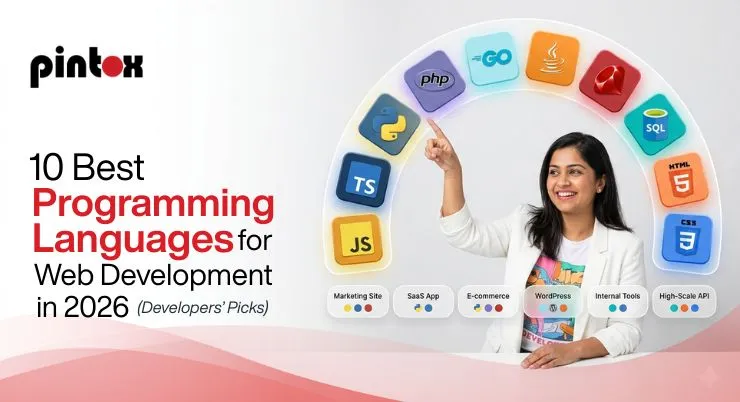
These are the ten picks developers keep choosing in 2026. Each one wins in a different use case. Most real projects use several languages together.
Modern stacks also rely on supporting web development technologies like hosting, APIs, and build tools.
1. JavaScript (Front-End Development + Full-Stack Options with Node.js)
JavaScript powers the interactive web. It’s the most common language in website front ends. Node.js also runs on servers. That makes hiring easier in the USA. It fits web apps, dashboards, and SaaS builds.
Best for: Fast teams, full-stack builds, and broad tooling.
2. TypeScript (JavaScript for Larger Apps and Better Maintainability)
TypeScript adds a safer structure to JavaScript. It reduces bugs in bigger codebases. It improves scalability when teams grow. It also helps with long-term maintenance. Many USA teams now default to TypeScript.
Best for: Larger web apps and shared team development.
3. Python (Fast Builds, Automation, and Back-End Development)
Python is known for its speed of development. It’s a strong choice for Back-End Development. It shines in automation and data-heavy work. It’s also easy to read and maintain. That helps when multiple developers touch the code.
Best for: APIs, admin tools, and automation workflows.
4. PHP (Still the Core Programming Language for WordPress)
PHP still runs a huge portion of the web. It is the programming language for the WordPress core. That matters if WordPress is your platform. It pairs well with JavaScript for modern features. It also has strong hosting support in the USA.
Best for: WordPress builds and content-driven sites.
Also fits: Any WordPress development language discussion.
5. Java (Enterprise Backends, Stability, and Long-Term Support)
Java is built for long life. It runs many enterprise systems. It supports strong tooling and security practices. It’s not “fastest to start,” but it lasts. It’s also not the same conversation as “Java or HTML.”
Best for: Enterprise platforms and long-term back ends.
6. C# (Modern Web Apps with .NET Ecosystem)
C# is popular in business software. It pairs with the .NET ecosystem for web apps. It’s strong for performance and structured teams. Many USA companies already use Microsoft tools. That lowers adoption friction.
Best for: Business apps, portals, and integrated systems.
7. Ruby (Speed of Development for Startups and MVPs)
Ruby is known for rapid building. It supports strong conventions and readable code. That improves ease of development early on. It works well for MVPs and quick launches. It’s still a solid choice for startups.
Best for: MVPs, prototypes, and quick iteration.
8. Go (High-Performance APIs and Scalable Services)
Go is simple and fast. It performs well under load. It supports clean concurrency for modern services. That helps when your product scales quickly. It’s a strong fit for API-heavy systems.
Best for: High-traffic services and scalable APIs.
9. SQL (Not a Website Language – But Essential for Real Data Work)
SQL is not a website language. It is still essential for real products. Most web apps need stored data. SQL powers reporting, analytics, and operations. It matters for quality and business decisions.
Best for: Databases, reporting, and data integrity.
10. HTML + CSS (The Foundation of Every Website’s Front End)
HTML structures pages and content. CSS controls layout and design. They are website front-end languages by default. They are also the most visible language in website output. Every “language in website” stack includes them.
Best for: All sites, from landing pages to web apps.
Best Web Programming Language by Use Case
The best web programming language depends on the work. Different types of web development call for different choices.
Use Case | Recommended languages | Why it fits (desired outcomes) | Common Frameworks | Hiring + maintenance notes |
Marketing site | HTML, CSS, JavaScript | Fast pages, strong UX, easier SEO | React, Next.js | Large talent pool, low risk |
| Web app / SaaS | TypeScript, JavaScript, SQL | Scale features, stable code, reliable data | Next.js, NestJS | Strong Community Support |
Ecommerce | JavaScript, TypeScript, SQL | Speed, integrations, and inventory reliability | Next.js, Node stacks | Many Resources and vendors |
| WordPress site | PHP, JavaScript, HTML, CSS | Fast publishing and plugin ecosystem | WordPress ecosystem | Easy to hire contractors |
| Internal tools | Python, TypeScript, SQL | Faster builds and automation | Django, FastAPI | Great Resources, strong tooling |
High-scale APIs | Go, Java, SQL | Performance and scalability | Go toolchain, Spring | Stable hiring for Java |
Website Language Basics (So You Don’t Choose the Wrong Thing)
Many buyers ask, “What is my website language?” That question is fair. It also needs a clearer answer.
A modern site is a system. It includes a front end, a back end, and data. That’s why one language in website stacks is rare. It also explains why “easy code languages” can be misleading.
Java or HTML? Here’s the Simple Answer
“Java or HTML” is a common search. They are not competing choices. HTML builds page structure in the browser. Java is a programming language used for back ends. Most websites use HTML, even if Java runs the server.
Website Front-End Languages vs Back-End Development
Website front-end languages run in the browser. That usually means HTML, CSS, and JavaScript. Back-End Development runs on servers and handles logic. That can be JavaScript, Python, Java, C#, PHP, or Go. A good stack connects both sides cleanly.
How Developers Choose the Right Language in 2026
Great choices come from a clear filter. Developers weigh more than popularity. They look at practical aspects that affect delivery.
This is where web development frameworks matter too. Your app’s Frameworks can shape speed and cost.
Step 1 – Define Project Requirements and Non-Negotiables
Write your project requirements. List deadlines, integrations, and compliance needs. Include security and data rules. Also, define your team setup. These details prevent costly changes later.
Step 2 – Match Performance and Scalability to Your Roadmap
Not every site needs extreme speed. Some apps do. Plan for traffic, features, and data growth. Then choose a language that supports scalability. This keeps performance stable as you expand.
Step 3 – Evaluate Frameworks, Community Support, and Available Resources
Frameworks speed up development and reduce risk. Community Support helps when issues appear. Resources matter for hiring, docs, and tooling. Strong ecosystems lower long-term maintenance costs. Weak ecosystems create slowdowns and surprises.
Do You Need Several Languages for One Website? (Usually, Yes)
Most websites use several languages together. That’s normal, not a problem. Each language does a specific job well.
A simple site can still use three layers. A web app can use even more. The goal is a clean handoff between parts.
Typical Modern Stack Example (Front End + Back End + Database)
Here’s a common pattern:
- Front-End Development: HTML, CSS, JavaScript, or TypeScript
- Back-End Development: Node.js, Python, Java, or C#
- Database: SQL for structured, reliable data
This mix supports speed and stability. It also makes teams easier to scale.
WordPress Development Language Choices (When WordPress Is the Right Fit)
WordPress still wins for many businesses. It’s great for publishing and marketing workflows. It’s also common for small teams. That makes it a smart USA choice in many cases.
If you’re deciding on the programming language for WordPress, focus on the real stack. WordPress development language choices usually center on PHP and JavaScript.
When WordPress Makes Sense for USA Businesses
WordPress fits when content is the product. It also fits when you need fast updates. It can support e-commerce and lead generation. It works best with good hosting and clean plugins. It also needs clear maintenance rules.
Common WordPress Stack (PHP + JavaScript + HTML + CSS)
A typical WordPress stack includes:
- PHP for themes, plugins, and core behavior
- JavaScript for modern interactions
- HTML + CSS for layout and styling
A clean web development process matters more than chasing trendy stacks. Process protects timelines, budgets, and quality.
FAQs (2026 Web Development Languages)
What are the best programming languages for web development?
The best options depend on your goals. JavaScript, TypeScript, Python, and PHP cover many needs. Go and Java fit high-scale or enterprise work.
Which programming language is most commonly used for web development?
JavaScript is the most common choice today. It runs in browsers and can run on servers. That makes it a default for many teams.
Is JavaScript the best language for web development?
It is often the best starting point. It fits front-end work and many back ends. Still, your use case should decide.
Is Python a good programming language for web development?
Yes, especially for back-end APIs and tools. It supports fast development and readable code. It also fits automation and data-heavy needs.
Why is JavaScript important for modern web development?
It powers interactive experiences in browsers. It also supports full-stack builds with Node.js. That flexibility keeps it central.
What frameworks are commonly used with web development languages?
JavaScript often pairs with React or Next.js. Python often uses Django or FastAPI. Java often uses Spring for structured systems.
How do developers choose the right programming language for web development?
They start with project requirements and constraints. Then they check performance and scalability needs. Finally, they validate hiring and ecosystem support.
Are multiple programming languages required for web development?
Often, yes. Most sites use HTML, CSS, and JavaScript at a minimum. Many also add a server language and SQL.
Let’s Turn the Right Language Into a Website That Converts
The right language helps, but execution wins. A clean plan, solid build, and smart UX matter most. If you want a USA-ready site that performs, let’s talk. Book a Call or Get a Quote.
Get a Stack Recommendation Based on Your Goals with Pintox Digital
Still unsure which stack fits your project? That’s normal. Most teams need help translating goals into technical choices. If you want us to plan and build it, our web development services cover strategy, build, and launch support.