When a person subscribes to your newsletter, downloads a guide, fills out a contact form, or subscribes to your service, that person is paying attention to you. That person wants to know what you are, what you do, and if they have made the right choice. For this reason, welcome email sequences are among the most precious instruments in email marketing today.
Businesses invest resources in generating new leads but ignore communication after the lead generation process. A slow reply or just any generic message might make you miss out on potential deals. However, a well-crafted email sequence is the thing that will help you present your brand, establish your authority, and encourage new subscribers to become your loyal customers.
Regardless of the fact whether you have a local business, a store, or a service-based company, building welcome email sequences will be helpful for your business and will bring you additional conversions and sales without extra efforts from your side.
In this article, you’ll learn about building your own welcome email sequences, mistakes that should be avoided, and how to automate this process to achieve the best results.
Why Every Business Needs a Welcome Email Sequence
The welcome email is not just a greeting. It is actually the first step in building your relationship with the prospective client. The success of the initial impression email will determine the future of communication with your brand.
The right welcome email sequence provides all necessary information to subscribers while slowly presenting them with your offers. Instead of pushing people towards buying from you, it simply builds their trust by answering any possible questions before they become apparent.
Companies that use welcome email sequences benefit greatly from increased subscriber engagement and higher rates of customer retention since every contact with the audience is planned and has a clear purpose.
The email onboarding sequence also serves as a means for the newcomers to know everything about your business. They get to know its values, its areas of expertise, and how your solutions can be used to overcome different challenges.
Such an approach allows easy lead conversion with customer experience enhancement at the same time.
What Makes a Welcome Email Sequence Convert
It’s important to note that every welcome email does not necessarily perform. The email could be too short; on the other hand, it could be too pushy when trying to promote something before earning the customers’ trust.
However, the best welcome email strategies are those that adopt the simplest approach. Each welcome email should have a singular intention and move your customer closer towards making a decision.
A standard welcome email strategy will include:
- Introduction of your brand to your client
- Informing him of his expectations from the upcoming emails
- Educational material
- Establishing credibility through testimonials
- Next steps
It’s not all about sending emails, but having a good discussion.
Email personalization is another key consideration. Greet your subscribers by their name, if possible, and personalize your content according to how they became your subscribers. One subscriber might have contacted you for a consultation, while another could be downloading your free guides.
Email segmentation is yet another critical component. As you will see below, by grouping your subscribers into separate segments, your business can ensure that they receive relevant emails and hence increase their engagement and email click-through rates.
Finally, your welcome email sequences should include calls to action. Your subscribers must be motivated to perform one single action in each of your emails.
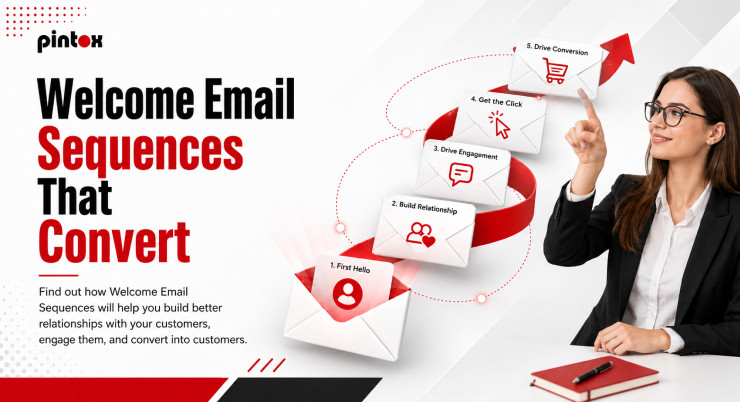
The Ideal Welcome Email Flow
The ideal welcome email sequence should include several emails rather than relying on just one.
Email 1: Welcome and Thanks
The arrival of this email should occur right after people subscribe. This email should express gratitude and let people know what exactly they subscribed to.
This is the beginning of your onboarding process and the beginning of the subscriber’s journey.
Email 2: Tell Your Story
Consumers purchase from businesses that they trust.
Tell people about your business and why you founded it, and let people know about your mission. Rather than promoting the products, tell your audience about solving their problems.
This will give a strong foundation to your customer lifecycle right from the start.
Email 3: Add Value
Do not pitch your services; educate your readers instead. Send an interesting article, a checklist, industry insights, or valuable tips to your subscribers.
Email 4: Display Results
Now is the best opportunity to feature testimonials, case studies, reviews or success stories. Proof of results will add credibility and assist subscribers in moving further in the marketing funnel.
Email 5: Encourage Them to Act
After establishing their trust, now is the opportunity to get them to act.
Some actions could be:
- Arrange a consultation
- Arrange a demo
- Start a free trial
- Get a quotation
- Make a purchase
This concludes your five-step email series for new subscribers.
Common Mistakes That Hurt Conversions
Even well-crafted welcome email sequences are prone to failure due to some common errors.
Single Email
A single welcome email will not contain enough details to establish trust. A whole welcome email sequence helps companies educate and nurture subscribers over several days.
Promotion too Early
Subscribers first need something valuable to receive in order to be ready for purchase. Frequent promotions and a lack of education usually damage customers’ engagement level.
Generic Emails
Each subscriber is unique. The absence of email personalization makes communications look automated. Tailored messages perform better than generic ones.
Unclear Purpose
Each email should contain just one goal. The excessive number of links and CTAs often confuses the recipient.
Neglecting Mobile Subscribers
Emails are most likely opened from mobile devices. Clean format, short paragraphs, and big buttons help with reading and increase the probability of email opens in the future because of improved engagement.
Not Testing
Minor changes in the email subject, message content, or CTA button could greatly affect email campaign performance.
How Automation Makes Welcome Emails More Effective
It becomes increasingly hard to do manual personalized communication as your business expands. And here is when you need email automation for welcoming customers.
Rather than sending all emails yourself, an automated email workflow sends them according to the actions of the customer.
So, for instance:
- The person downloads the guide.
- They get the first email of welcome automatically.
- Two days later, they get educational content.
- A little while later, they get success stories of your customers.
- And finally, they get an email asking them to schedule a consultation.
This kind of email automation ensures that communication is consistent without overloading you. Email automation for follow-ups is equally useful for businesses.
Marketing automation technologies have allowed businesses to send trigger emails rather than scheduled emails. Trigger emails are more effective since they are sent after the customers perform certain actions.
The ability to use trigger emails makes the technology very useful in email automation for small businesses, as there are not enough people to perform many tasks at once.
Also, many businesses integrate CRM email automation with the sales process in order to synchronize the efforts of marketing and sales departments.
It would be interesting for some people to know the difference between marketing automation and email marketing. The major difference between them is that email marketing is about sending email campaigns, while marketing automation is about using emails in connection with customer behavior.
Using GoHighLevel to Build Welcome Email Sequences
Companies that seek an all-in-one solution will be interested in GoHighLevel email automation because it includes all functions, such as CRM, automation, sales, and communication in one application.
Instead of utilizing several services, businesses will be able to build comprehensive welcome email sequences in one CRM program.
With the help of the workflow builder, you will be able to:
- Develop a comprehensive onboarding email workflow
- Make personalized lead nurturing emails
- Send automated welcome emails
- Create emails after the form submission
- Automate reminders and follow-ups
- Record all customer interactions in one CRM workflow
In addition, GoHighLevel allows sales automation to simplify the process of moving leads from the pipeline.
While your company is growing, your automation tool will continue its work 24/7, giving the same high-quality experience to each subscriber.
Businesses that have already used other business automation solutions can see how useful adding welcome email sequences is because it helps build more solid relationships and saves time.
Measuring the Success of Your Welcome Email Campaigns
However, Building Welcome Email Sequences is just one of the preliminary steps. You have to analyze their effectiveness in order to improve future campaigns.
The most essential metrics that should be considered are the following:
Open Rate
An attractive subject line will motivate your subscribers to read your emails. Therefore, testing various subject lines will assist you in increasing email open rates.
Click-Through Rate
It measures the engagement of your subscribers with your email marketing.
Conversion Rate
Effective welcome email sequences should bring you a variety of appointments, sales, consultations, and other conversions.
Unsubscribe Rate
It usually means that your emails are sent too often or too aggressively and do not meet subscribers’ expectations.
Engagement During Whole Email Drip Campaign
You have to pay attention to the interaction of your subscribers with your emails within the whole email drip campaign, not with one single email.
Best Practices for Long-Term Success
Companies that regularly produce positive results with their Welcome Email Sequence usually have certain things in common.
- They write in human language, not marketing jargon.
- They teach before they sell.
- They emphasize the benefits of solutions to the customer’s problem over features.
- They constantly develop themselves based on performance data.
However, the most important thing about such companies is that they never forget that each subscriber is an individual human being in search of valuable information.
If you add value in your emails, people will be willing to trust your company, share the word about you, and keep in touch with your brand even after the end of the sequence.
Frequently Asked Questions
What is a welcome email sequence?
A welcome email sequence is a series of automated messages sent to newly joined subscribers or customers to introduce your brand, give some useful information, and drive them to the next move.
How many emails should be included in a welcome sequence?
3 to 5 emails are sufficient for most companies to get successful. Such an amount of emails will allow you to build a trusting relationship with your audience and provide them with valuable information.
When should the first welcome email be sent?
The first welcome email should be sent right after someone subscribes to your newsletter.
What should be included in a welcome email?
A welcome email should contain all important aspects, including thankfulness, introduction of your business, description of the next actions on the part of the subscriber, useful information, and one call-to-action button.
How do Welcome Email Sequences increase conversions?
They build trust over time by educating new subscribers, answering common questions, and keeping your brand top of mind. This makes people more likely to take the next step when they’re ready.
Is it possible to automate Welcome Email Sequences in GoHighLevel?
Yes. It is possible to automate Welcome Email Sequences in GoHighLevel through the use of workflow and trigger tools, as well as the CRM.
How should welcome emails be personalized for new leads?
You can utilize the name of the person, create segments of your audience, and then send content based on their preferences.
Final Thoughts
A great welcome email sequence not only serves to inform your potential customers about your company. This kind of sequence also helps to establish a bond of trust, answers all kinds of questions, educates, and helps to turn a subscriber into a loyal customer.
When developing a welcome sequence, it is crucial to provide useful information, communicate consistently, and make each message valuable and relevant to the recipient. All of this is possible when you carefully plan, use email automation for sending messages, develop a good email onboarding sequence, and make email marketing automation work for you.
Used in combination with tools like GoHighLevel, CRM email automation, and an effective email workflow automation, the welcome emails become an indispensable element of any business’s sales and marketing strategies.